Script AI tools
Generate scripts & stories with AI
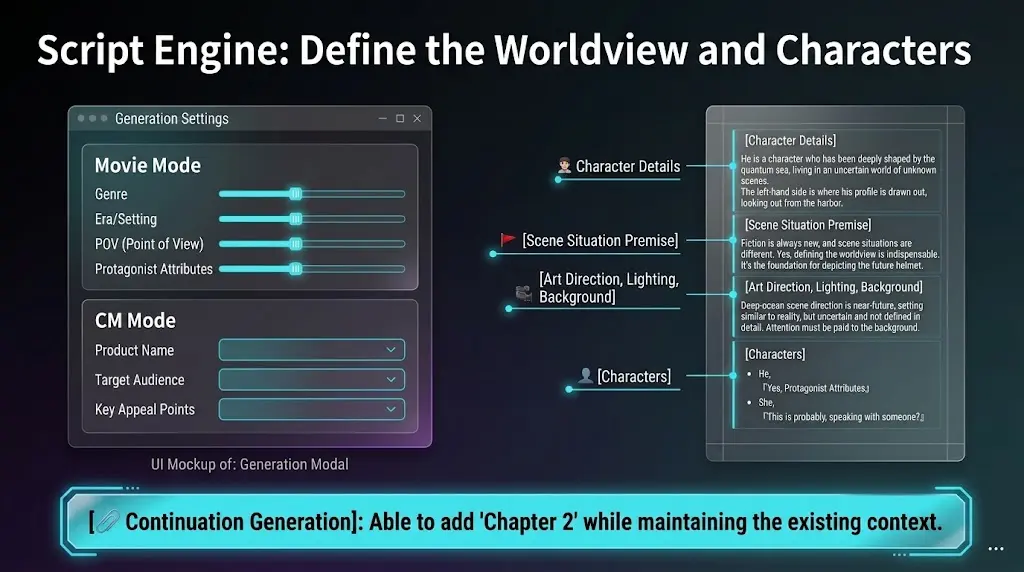
Generate scripts from scratch. Pick main and sub-genres, era, keywords, character attributes, and more—AI delivers story, cast, scene premise, art direction, and extras together in one package. With billions of possible combinations, you get an original story that’s uniquely yours.
Visualize classics, myths & famous stories
Adapt a source into your own film script—original visualization, not a copy of an existing movie.
Movie editor → Script generation → Movie / Drama tab → describe your vision in “What kind of film do you want?” For a known source (Romeo and Juliet, etc.), check Adapt / visualize from a source work below that field, then generate.
Adaptation & visualization—not a film remake
A film “remake” rebuilds an existing movie. Classics on screen are closer to adaptation or visualization—and that’s how this feature works.
New script honoring source plot, beats, and relationships
Copying existing film/TV screenplays
Colloquial, modern film-style Japanese dialogue
Textbook tone, stage phrasing, famous lines verbatim
Stage directions rewritten for your film
Verbatim published translations or source English
Quick start
- 1
Write simply in “What kind of film do you want?”
- “Please generate a Romeo and Juliet film script.”
- “Please write a fantasy film script based on Alice in Wonderland.”
- “Please generate a mystery suspense script based on Sherlock Holmes.”
- 2
Refine with genre, era, keywords—or leave “Let AI decide.” For a source work, enable the adaptation checkbox.
- 3
Generate → stickies → cut prompts → video. Extend with continuation or the “Add English dialogue” chip.
Modern film dialogue
Colloquial film-script tone—natural modern Japanese; English lines stay everyday film dialogue, not literary prose.
Combine with Forbidden Switch
Pick the story with visualization; dial intensity with the Forbidden Switch (Premium). Your era and genre stay yours.
Learn more →You are responsible for rights and publication. Public-domain status varies. Do not use modern protected works without permission.
How many story-setting combinations?
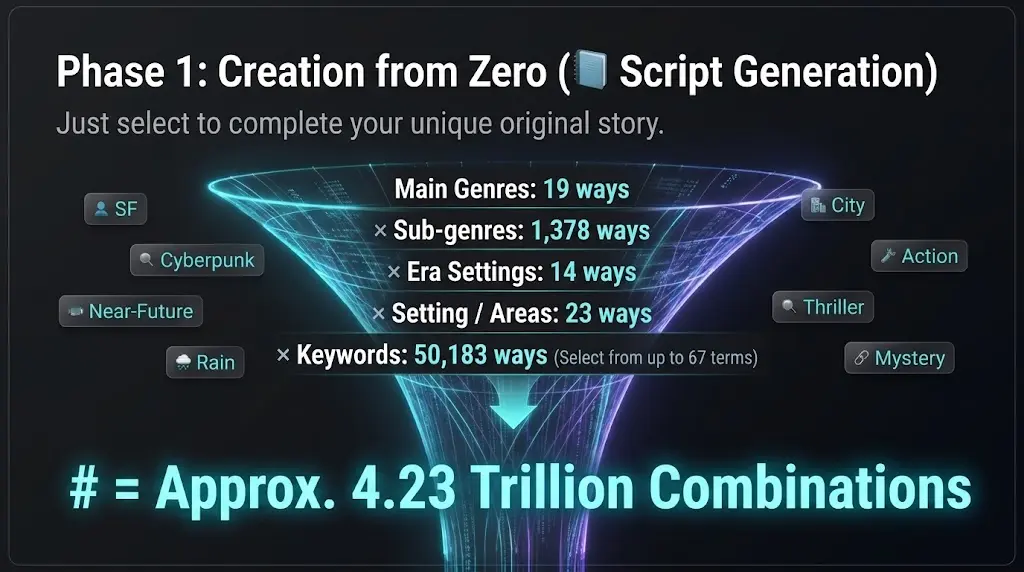
Rough stack-up of options in the generator: one main genre, two sub-genres, era, setting/area, and keywords. Up to 67 keyword chips can be combined; the total swings widely depending on how many you pick.
| Factor | Ways |
|---|---|
| Main genre (incl. “Other”) | 19 |
| Two sub-genres from 53 chips (Romance 24 + Gang 16 + Comedy 13) | 1,378 |
| Era (fixed list, excl. free-text “Other”) | 14 |
| Setting / area | 23 |
| Ways to pick 1–3 keywords (sum of combos from 67) | ≈ 50,183 |
Multiply all rows: on the order of 4.23×10¹¹ combinations — hundreds of billions.
19 × 1,378 × 14 × 23 × 50,183
Total combinations by keyword usage (estimate)
| Keywords | Total (approx.) |
|---|---|
| Exactly 1 | ~560 million |
| 1 or 2 | ~19.2 billion |
| 1 to 3 | ~400+ billion |
| Unrestricted (over 2⁶⁷ in theory) | Astronomical (10²⁰+ scale) |
You always have hundreds of millions of paths at minimum; with a few keywords, totals reach hundreds of billions. Figures are illustrative from current UI counts and may change with product updates.
How to Use
Click the "Generate Story" button
Click the button at the top of the script area to open the generation modal.
Set your conditions
In the modal, select genre, era, setting, keywords, perspective, protagonist attributes, story development, tempo, and volume (character count / cut-count guidance). You can pick multiple genres and mark one as Main if you like. Use the free text field for extra notes.
Click "Generate"
AI writes the script from your settings in a few seconds. Credits charged: 1–4 depending on volume (Short 1, Standard 2, Long 3, Extensive 4).
Script is auto-inserted
The script body and character details are automatically inserted into the text area. You can use them as-is or edit manually.
The Forbidden Switch
Seven mythic story laws—dial up drama without changing your world. A Premium / Studio feature.
Why do myths and timeless stories still grip us? They lay bare our deepest weaknesses, desires, and longing for redemption. Hollywood craft—the hero’s journey and beyond—systematizes these same structures.
The Forbidden Switch injects seven dramatic laws from timeless stories directly into script generation. Flip a switch and your story gains mythic momentum. The panel appears at the bottom of the script generation modal (Movie tab).
The 7 mythic story laws
Seven engines that drive great stories—use one or layer several to dial intensity to your material.
The Forbidden Line
A line that must never be crossed—broken early. The point of no return grips the audience instantly.
The Flawed Protagonist
No one roots for the flawless. A fatal weakness, twin to their strength, is what makes us care.
The Underdog Reversal
An unbeatable wall, toppled by wit and conviction. The catharsis that has thrilled audiences for millennia.
Fall and Redemption
From rock bottom, through hardship, to true purpose. The timeless arc of human growth.
The Intimate Conflict
The greatest enemy isn’t an outsider but family or a best friend. Betrayal by a loved one cuts deepest.
The Impossible Choice
What you love most vs. a mission you can’t abandon. A no-win choice exposes who they truly are.
The Lasting Scar
No cheap happy ending. A scar that never fades—and the hard-won calm beside it—leaves a haunting resonance.
Two ways to use it
① Choose yourself
Tick laws individually—e.g. underdog reversal plus an impossible choice—for precise dramatic control.
② 🤖 Let AI choose
AI analyzes your inputs and auto-selects 2–4 effective laws, avoiding contradictions so the story stays coherent.
Your world stays your world
“Mythic laws” might sound like they’d drag your story into a religious setting—they won’t. No scripture names or motifs are injected.
Your era, setting, genre, and world come first. Laws act only as structure—modern sci-fi, office drama, feudal romance; the stage stays yours.
Why it’s Premium
Like a script doctor on staff—for scripts that feel flat or “almost there.” Same credits as a normal generation. Try one script with the switch on and feel the difference.
🎬 Movie Mode
Set genre, perspective, protagonist, and story development to generate scripts for movies or short films.
In development. (Beta)
📺 CM Mode
Set product name, category, visual style, and target audience to generate scripts for commercials.
Choosing genres (Movie tab)
- You can select multiple genres at once, and add sub-themes from panels such as Romance, Gang, or Comedy.
- Click a selected genre chip to mark it as Main (click again to clear). If you leave Main unset, the model treats chosen genres as peers in the story.
- The output always includes a “Main genre:” line and a “Sub-genre:” line. A Main chip nudges the primary label; without it, the model still splits peer elements across those two lines.
What the generated script looks like (movie sample)
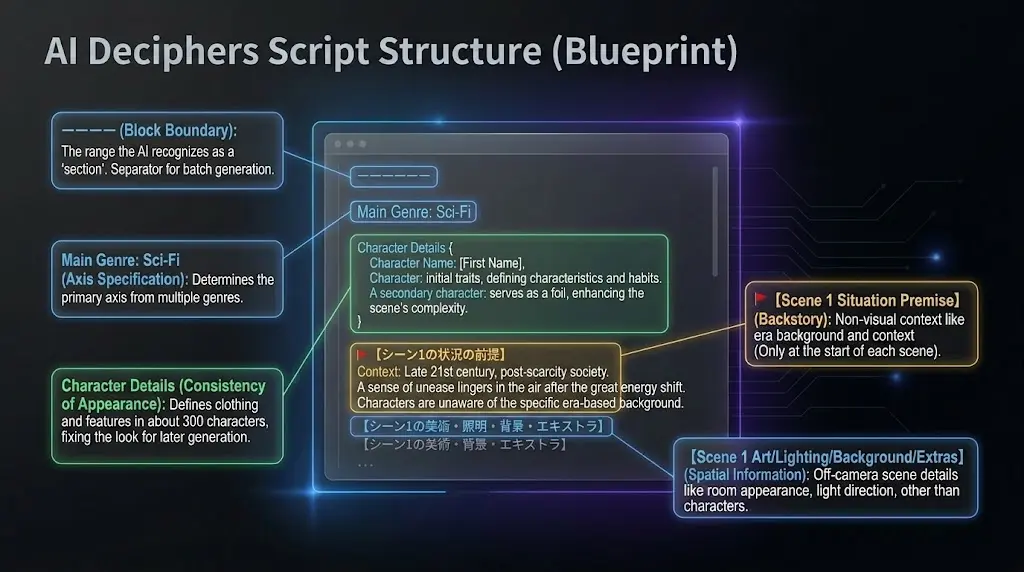
Wording varies by project. The overall shape looks like this (headings are fixed as shown).
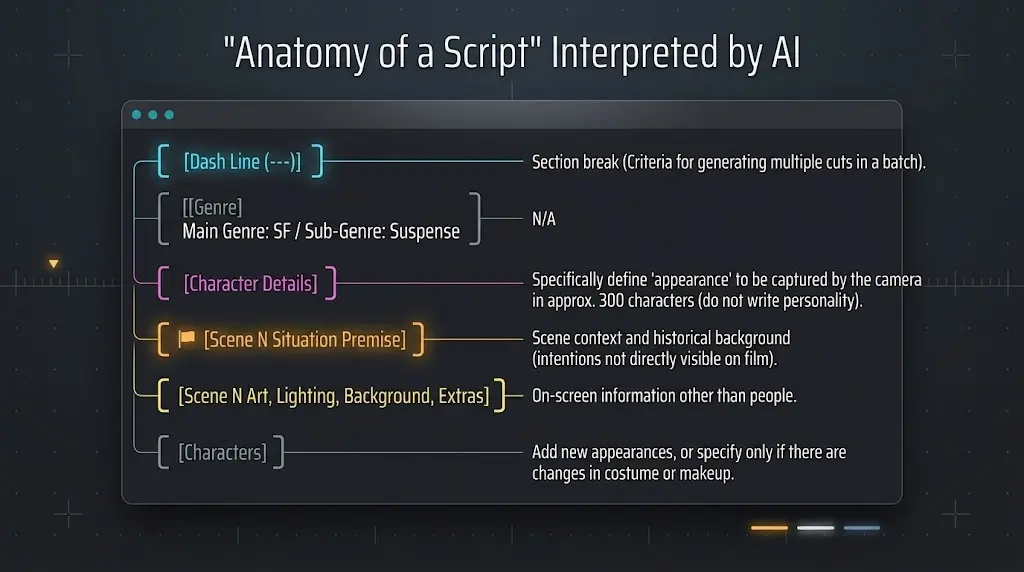
Show sample script block and heading explanations (click to expand)
----------------

Episode 1 "The Gilded Trap"

Main genre: Mystery
Sub-genre: Suspense, social drama

Character Details
[Protagonist: Emily] … (one sentence, appearance only, ~300 chars guideline)

[Script Body]

🚩[Scene 1 — situational premise]
(Era, context, agendas — not directly on screen; do not invent facts absent from the script)

[Scene 1 — ART, LIGHTING, BACKGROUND & EXTRAS]
(Space, props, lighting, background extras — no named character looks)

[Characters — this scene]
No change.

(stage directions & dialogue)

🚩[Scene 2 — situational premise]
(Each new location/time still starts with premise)

[Scene 2 — ART, LIGHTING, BACKGROUND & EXTRAS]
(Next scene space, lighting, etc.)

[Characters — this scene]

[New characters]

[Suspect — new]
… (first-appearance look in full detail)

(stage directions & dialogue)

🚩[Scene 3 — situational premise]

[Scene 3 — ART, LIGHTING, BACKGROUND & EXTRAS]
(Another scene)

[Characters — this scene]

[Returning characters — wardrobe, makeup, or appearance change]

[Emily — look change #1 | date night | skin · makeup · wardrobe]
… (full post-change look, ~300 chars guideline)

(stage directions & dialogue)

----------------
Long fence lines
They wrap the whole document. Bulk cut generation uses this span as the script document. The “Section X / Y” badge in the movie editor reflects fence-delimited block order (position).
Episode heading (optional)
A single line like “Episode 1 …” may appear. If omitted, the main-genre line comes right after the opening fence. Missing headings can desync the badge’s section index from “Episode N” text in the script.
Main genre: / Sub-genre:
Reflects selected genres and any Main chip. Sub-genre may be “none” if there is nothing to list.
Character Details (heading)
A cast list before the script body. Each character is one sentence: commas inside, a single period at the end. It specifies job, age, ethnicity, height, build, hair, eyes, clothing, accessories — about 300 characters as a guideline (no personality or mannerisms).
[Script Body]
After this heading, the screenplay continues scene by scene.
🚩[Scene N — situational premise]
Placed **first** in each scene. **Only** this premise heading line starts with **🚩**; **N** matches the paired art heading. Off-screen context that shapes how the scene reads (era, narrative flow, agendas). **Do not invent facts** absent from the script; keep spatial enumeration in the art block that follows.
[Scene N — ART, LIGHTING, BACKGROUND & EXTRAS]
**Right after** **🚩[Scene N — situational premise]**, once per scene: **[Scene N — ART, LIGHTING, BACKGROUND & EXTRAS]** with **no** leading 🚩 on this line. **N** is sequential across the script (restarts at 1 within a continuation). Describes space, props, materials, lighting — everything on screen except named character looks. Not repeated mid-scene.
[Characters — this scene]
It follows the **[Scene N — ART…]** block. Character looks go here, not inside the art block. Add sub-headings only when there are new faces or look changes (no empty sub-sections).
- No change. — when no new faces and no look changes, but people are on screen: **only this line** under **[Characters — this scene]** (no sub-headings).
- None. — when no characters appear: **only this line** under the heading.
- [New characters] — use **only** when someone appears for the first time; under it, **[Name — new]** plus the next line’s full look (not in opening Character Details).
- [Returning characters — wardrobe, makeup, or appearance change] — use **only** when a returning character’s look changes; under it, one **look-change** line (two full-width |) and the next line’s full post-change look.
Compared to “Continue your script”
Continuations use the same per-scene order: **🚩[Scene N — situational premise]** → **[Scene N — ART, LIGHTING, BACKGROUND & EXTRAS]** → **[Characters — this scene]** (**N restarts at 1 within the continuation**; **only** the premise line has 🚩). Add **[New characters]** and/or **[Returning characters — wardrobe, makeup, or appearance change]** only when needed; otherwise a single **No change.** or **None.** line. Continuations still omit the upfront Character Details block and main/sub genre lines.
CM tab order
CM output order differs: after the script body come **Product Visual Details** or **Product/Service Details**, then **Character Details** (each product block is also one sentence, ~300 characters as a guideline).
💡 Character Details plus per-scene **[Characters — this scene]** blocks keep looks structured, so bulk cut generation can keep subjects consistent.
AI bulk rewrite of the full script
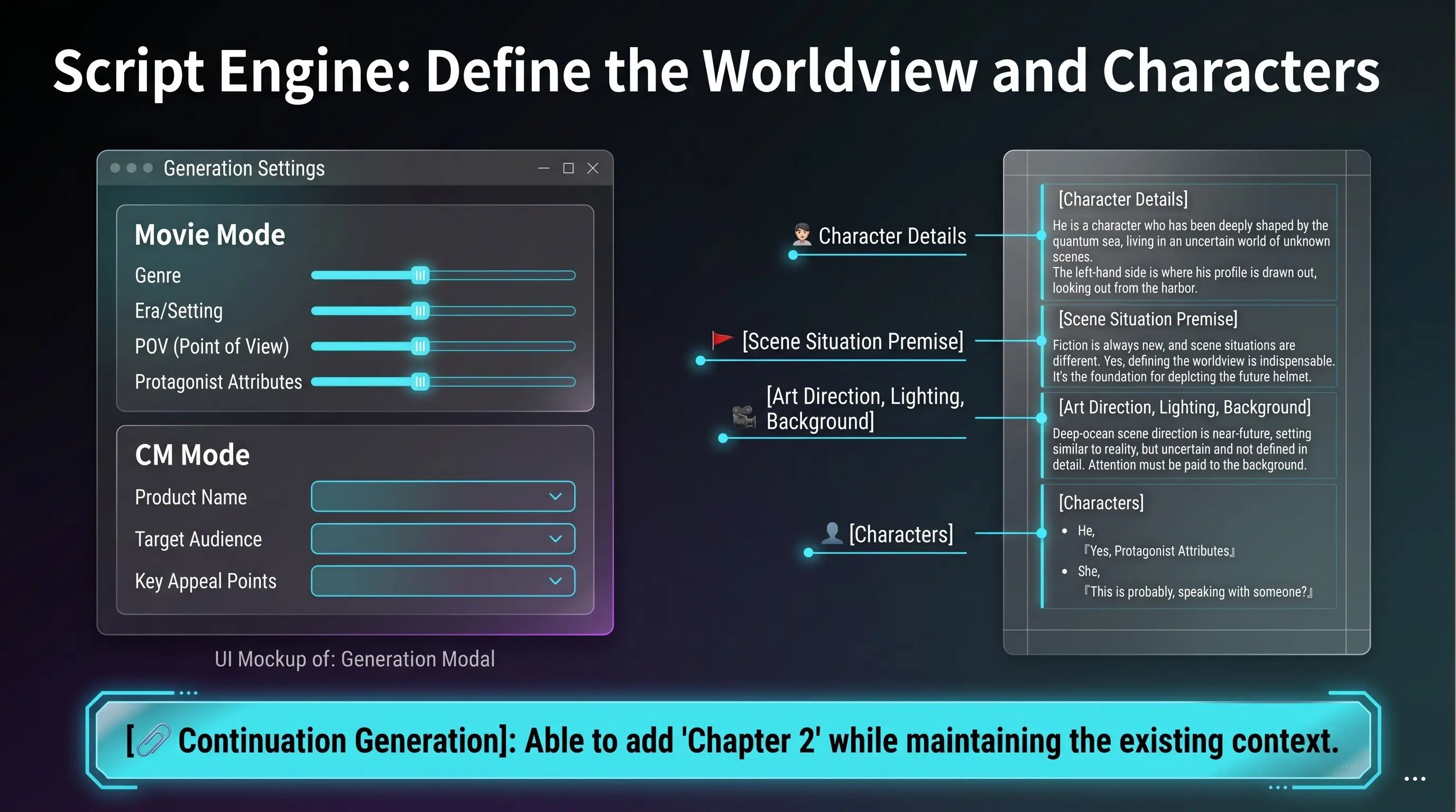
AI rewrites your entire script document from natural-language edits aligned with your directorial intent, plus optional quick instructions (preset text chips). It targets only the script in the text area — independent of timeline cuts. Compare before and after in a preview, then replace the full script in one step.
How to Use
Click “📝 Rewrite” / 台本修正
In the left column, click 📝 Rewrite (台本修正) in the lower row of the script toolbar. (Polish anything that bothers you in the script here — cut generation later is driven from this text.)
Enter rewrite instructions
In the modal, type freeform rewrite notes. You don’t need a perfect prompt — just say what you want changed, straight.
e.g. shift the story to a happy ending, or make the boss look scarier — AI rewrites the full script to match your intent as director.
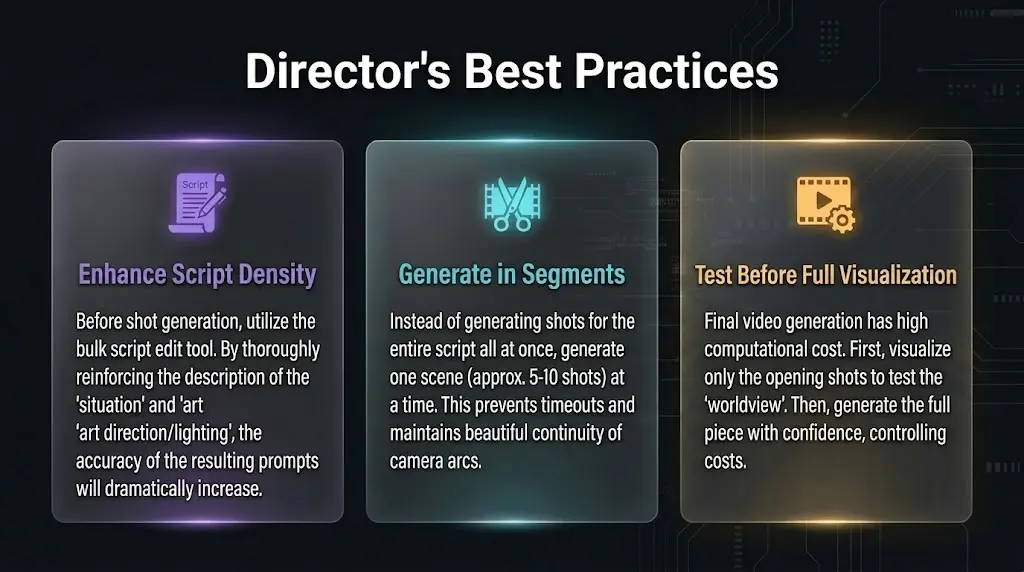
Once the script feels right, use the default quick instructions to add depth — situational explanation, world-building, art direction — so the next cut-generation step tends to track your story more accurately.
Run to generate the full rewrite
Run sends the job; AI returns the rewritten full script. This action consumes 2 prompt credits (per the app’s credit settings).
Review preview and Apply
Compare before and after side by side. Apply replaces the entire script text. Cancel keeps your original script, but credits are still consumed because the API already ran.
Quick chips
Compared to inline script AI edit
✏️ Inline edit rewrites only your selection (1 prompt). 📝 Bulk rewrite targets the full script document with a before/after preview and uses 2 prompts.
Refine any part of the script with AI
Select part of your script by dragging, then send editing instructions to AI via a floating panel. Only the selected portion is rewritten.
How to Use
Switch to text editing mode
Hide the timeline to make the text area editable.
Drag-select the part to rewrite
On the script text, drag with your mouse to select the range you want to edit.
Enter instructions in the floating panel
In the panel that appears when you select text, enter instructions in natural language.
Click "Generate" to rewrite the selection
AI rewrites only the selected portion while considering the full script context. Consistency with surrounding context and character settings is maintained.
⚠️ Note
This feature is unavailable while the timeline is visible, as the text area becomes read-only. Please hide the timeline first.
AI Storyboards & Character Sheets
Script done—but should you commit to cut generation yet? Visualize each episode as one sheet so you see first and decide fast, before the long read.
Google Gemini builds storyboard sheets or character reference sheets from your script—panels per scene, or cast in a row. One sheet = 10 AI credits per episode fence (`-----`).
Why you don’t have to read every word first
AI scripts grow long fast. A few seconds on one episode sheet conveys tone, staging, and climax direction. Text for detail, boards for decisions—that’s the design.
Instant go / no-go
Skip the full read—one sheet per episode shows tone, drama, and cast looks so you decide fast.
See blocking and story flow
Multiple panels on one sheet—scene turns, blocking, and cut rhythm at a glance.
Complements cut generation
Bulk cuts handle Veo/Sora prompts; storyboards and character sheets sit upstream for vision sharing.
Compare versions
Premium: 2 per episode, Studio: 5. Swap after rewrites and compare before and after.
Read-through in Reader mode
Reader inserts boards after each episode fence—script and visuals alternating.
Film strip on mobile
Scroll EP1, EP2… above the script. Tap fullscreen; rotate for detail on the go.
Character sheets
Horizontal cast reference—share who looks like what, especially in cinematic or live-action styles.
One episode = one storyboard sheet
Production-style layout—scene titles, action, dialogue in panels. Lightweight 1K WebP prioritizes overview over fine print.
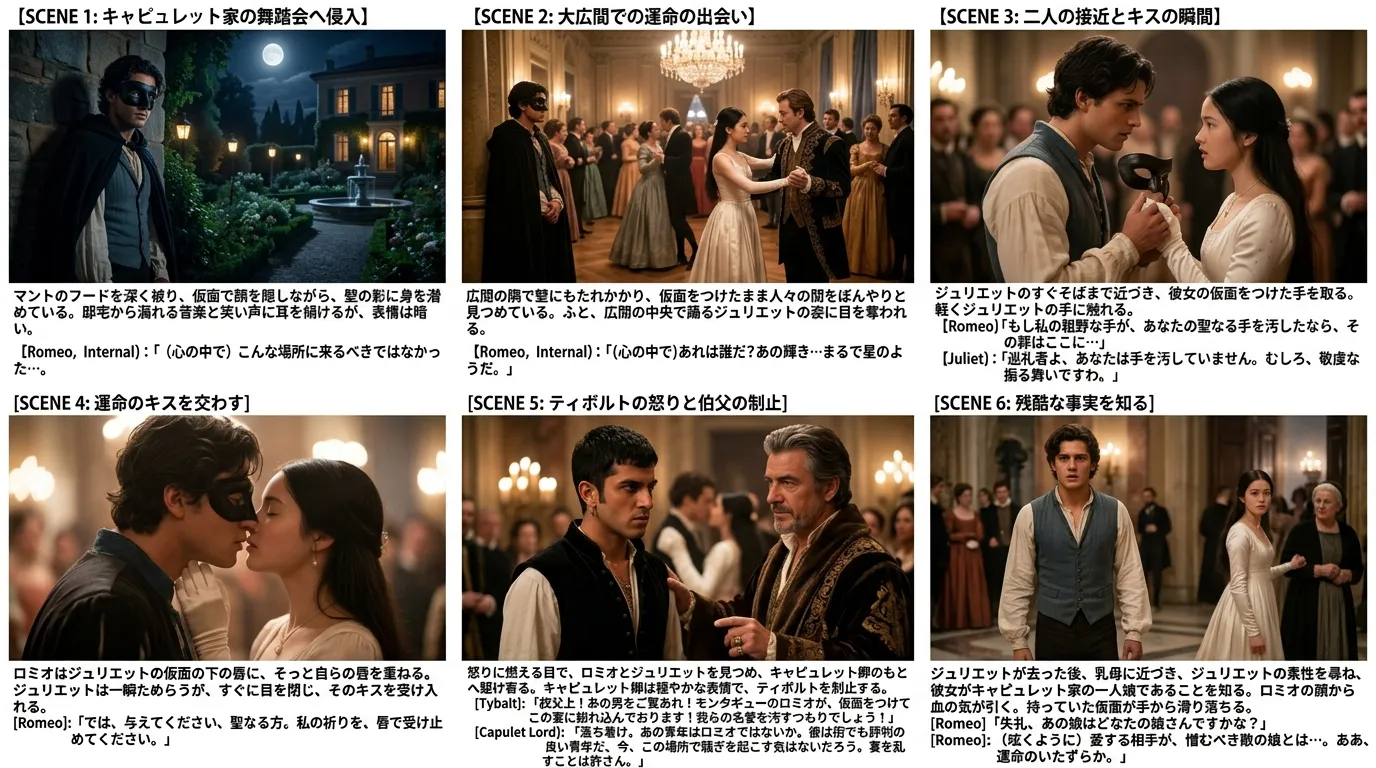
Four visual styles to compare
Switch styles per episode in “+ Gen”. Color/Sketch for rough sharing; Cinematic/Live-action to judge the finished look. Compare 2–3 at 10 credits each.
Color (Anime)
Manga-inspired tone
Sketch
Pencil rough
Cinematic
Film lighting & texture
Live-action
Photorealistic
Horizontal cast reference per episode—share who looks like what on one sheet. Generate before storyboards for better consistency.
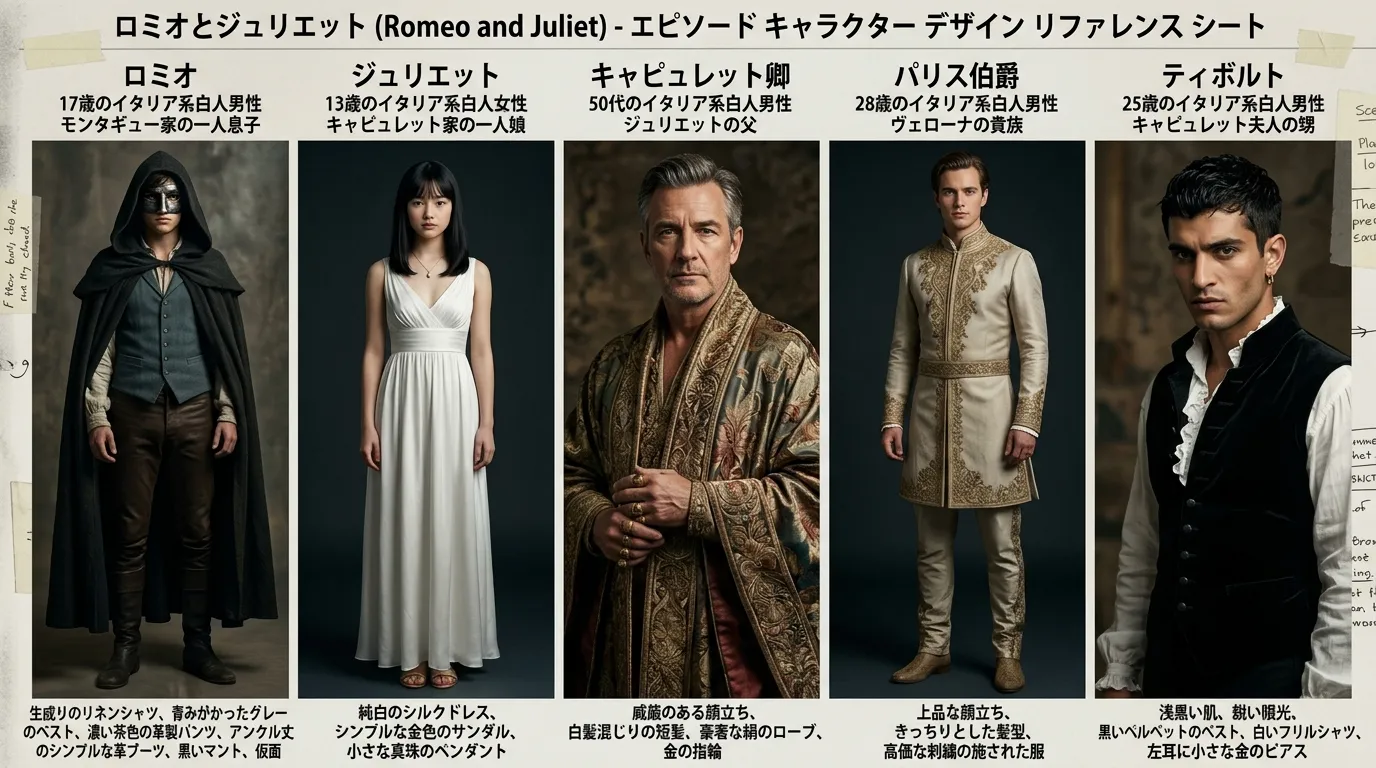
- 1Film strip “+ Gen” → choose “Character sheet”
- 2Pick style and generate (10 credits)
- 3Preview → save (Premium 2 / Studio 5 per episode)
Three places you’ll use it
- Film strip: Above the script—EP thumbnails and “+ Gen”. Pick type and style.
- Fullscreen viewer: Move across episodes and versions; controls never block the art.
- Reader mode: Inline after each fence (default ON). Read-through before you commit.
Then: cut generation
Once boards say “yes, shoot this,” proceed with bulk or single cut generation. Entering cuts with the big picture clear cuts rework.
Jump to bulk cut generation →Why Premium / Studio
Costly image APIs (10 credits/sheet), but they compress hours of reading and doubt into one visual. Ideal for script → boards → cuts end to end.